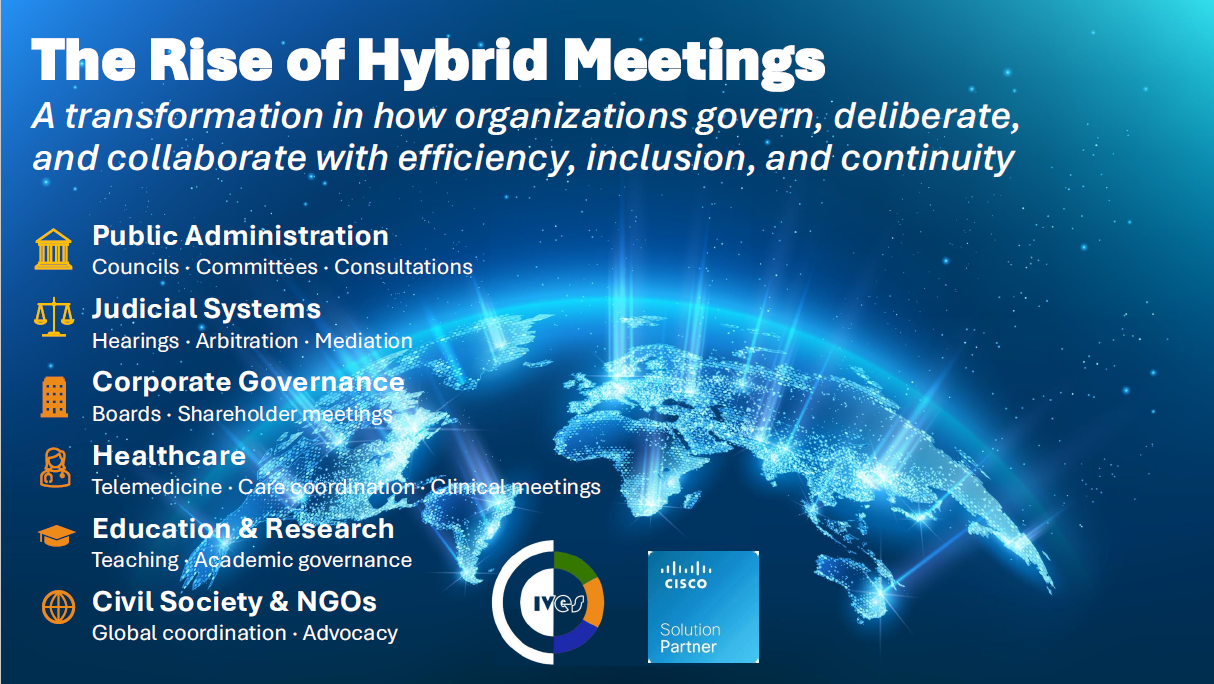
The Rise of Hybrid Meetings: Adoption, Impact and Sectorial Transformation
Introduction
7 min read
Brian McGlynn : Jul 28, 2026 2:25:25 PM
Why the public sector needs a different answer than the private one
There's a question every organization has been circling for years: does hybrid work actually produce results, or does it just produce flexibility? For a private company, that's a productivity question — output per employee, engagement scores, retention. For a government, a court, or a legislature, it's a different question entirely, because the "mission outcome" isn't a KPI on a dashboard. It's a case decided. A law passed. A permit issued. A constituent helped.
That distinction matters more than it sounds like it should.
Two Different Definitions of “Outcome”
Most of the hybrid-work literature of the last few years was written for the private sector, and it shows. The implicit outcome being optimized is organizational: efficiency, retention, cost per square foot of office space. Those are legitimate concerns, and they apply to government agencies too, as employers.
But courts, legislatures, and boards aren't just employers managing a workforce. They're the mechanism through which the public gets served — and that mechanism has an outcome the private-sector framework doesn't capture: did the institution do the thing it exists to do, on time, for the person who needed it?
A courtroom that can't hold a hearing because a witness can't travel isn't a productivity problem. It's a justice-delayed problem. A committee that can't reach quorum because members are hybrid-eligible in policy but not in practice isn't an engagement problem. It's a governance problem. The stakes are different, and so the definition of "mission outcome" has to be different too.
Where the Private-Sector Model Falls Short
Most corporate hybrid strategies optimize for a workforce that's largely interchangeable in terms of who needs to be in a given meeting. Government doesn't have that luxury. A judge, a specific witness, a specific legislator representing a specific district — these roles aren't fungible, and a hybrid model built for flexible headcount doesn't map cleanly onto institutions where every seat is a specific person with a specific, non-transferable function.
That's the gap between "hybrid work" as a workplace policy and "hybrid infrastructure" as institutional capacity. The first asks how many days a week someone comes to an office. The second asks whether an institution can still function — fully, not partially — when its participants aren't all in one room. Those are different design problems, and solving the first one doesn't solve the second.
What “Mission Outcomes” Looks Like When the Mission Is Public
For government, hybrid infrastructure earns its place only when it's measured against the mission, not against attendance. That means:
None of that is about employee convenience. It's about whether the institution's core function — its reason for existing — keeps running when the room isn't full.
The Regulatory Case: How One Jurisdiction Is Already Enforcing It
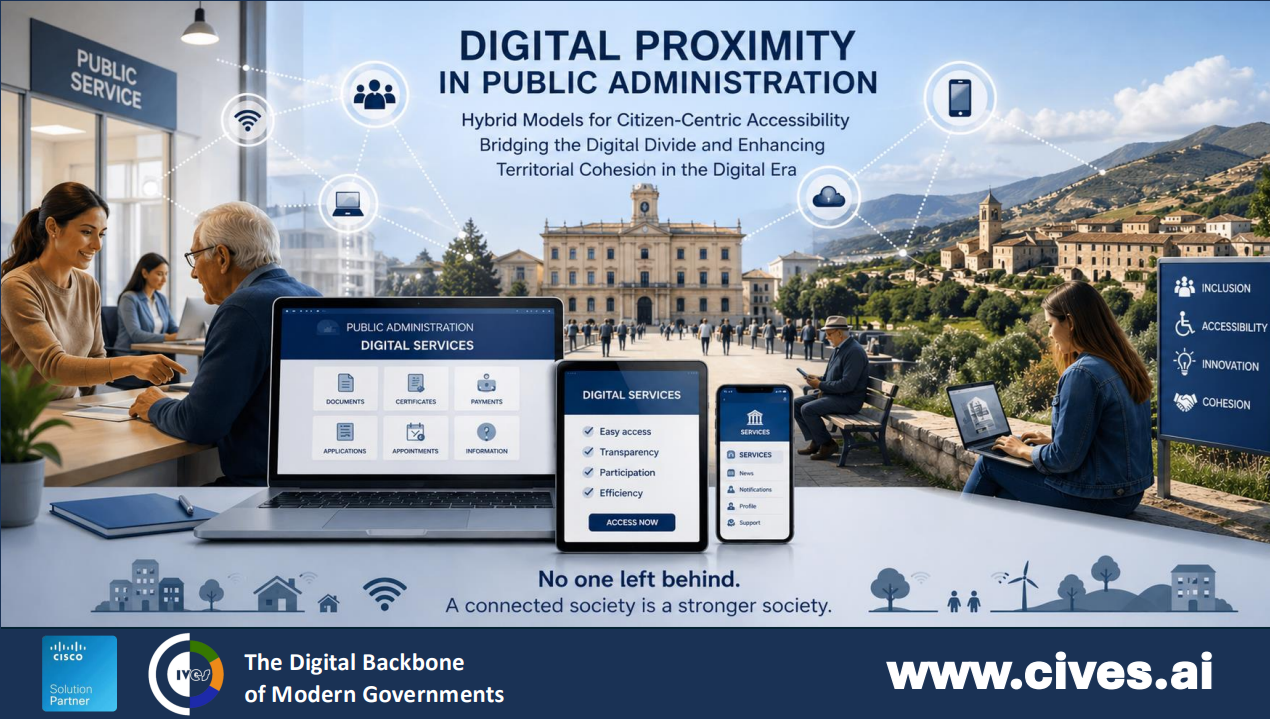
The argument above is normative — this is how government should think about hybrid infrastructure. The two regulatory examples below are American, because that's where the clearest binding standards happen to sit today. But the underlying shift isn't a U.S. phenomenon. Courts across Europe and Asia had statutory footing for video hearings in place before the pandemic made it urgent, specialized commercial courts in the Gulf have built hybrid hearings into their standing procedures as a matter of course — the Qatar International Court and Dispute Resolution Centre, for one, recently reported strong results from its own hybrid hearings — and comparative legal research spanning jurisdictions across multiple continents has documented the same pattern elsewhere: hybrid and remote capability — treated as a temporary emergency fix during the pandemic — is now being written into ordinary, permanent procedure as courts and legislatures modernize. The mechanism differs by jurisdiction — a California statute, a national procedural code, a court's own standing rules — but the direction is the same everywhere it's been studied. What follows is simply the most rigorously documented version currently available, not the only one.
California's SB 707 is the clearest example, and it isn't optional: it writes the hybrid mandate directly into open-meeting law, turning “mission outcome” from a design philosophy into a compliance requirement. Effective in stages through 2026, the bill amends the Ralph M. Brown Act to require that legislative bodies covered by the law offer the public genuine two-way remote attendance at open meetings, not a one-way livestream. Larger jurisdictions face additional obligations — real-time captioning, and language-access translation where a sufficient share of the local population has limited English proficiency. Notably, the law also treats remote participation by a member of the body as a permissible ADA accommodation, provided that member remains visible and audible to the public throughout the meeting. That single provision does exactly what this piece has been arguing: it reframes hybrid capability not as a convenience for the institution, but as an access right for the public and, separately, an accommodation right for the official — two different mission outcomes served by the same infrastructure.
The ADA Title II digital accessibility rule makes the same point at the federal level, from a different angle. DOJ's 2024 rule requires state and local governments to bring public-facing websites and mobile applications into conformance with WCAG 2.1 Level AA — the W3C's technical standard built around the POUR principles (Perceivable, Operable, Understandable, Robust). DOJ pushed the compliance dates back by a year in April 2026 — to 2027 for jurisdictions of 50,000 or more, 2028 for smaller ones — but the standard itself didn't move, and the deadline shift was explicitly framed as timing relief, not a reprieve from the obligation. For institutions building or upgrading hybrid meeting platforms right now, this is the moment to treat WCAG 2.1 AA conformance as a baseline requirement for any public-facing streaming, captioning, or participation interface — not a feature to retrofit once the 2027/2028 deadline is closer.
Read together, SB 707 and the ADA Title II rule describe the same shift from two directions: one says a hybrid meeting must be genuinely two-way to count as open; the other says the digital layer of that meeting must be genuinely usable by someone with a disability to count as accessible. Neither statute uses the language of "mission outcomes." But both are, in effect, codifying it — turning "did the public actually get to participate" from an aspiration into an enforceable standard, with real consequences for getting it wrong, as a later section makes concrete.
The Third Pillar: Courts and the NCSC Framework
Legislatures and boards aren't the only institutions this applies to — courts have their own version of the standard, and it's worth treating separately because a courtroom's mission outcome carries a stake the other two don't: due process. NCSC is the standard-setting body for U.S. state courts specifically; judicial administrations elsewhere are working through comparable questions on their own timelines, but the American initiative is the most rigorously documented one available today, which is why this piece leans on it. The Conference of Chief Justices and the Conference of State Court Administrators formally urged courts, back in 2022, to keep using technology to preserve access to legal services and make appearances possible remotely whenever practicable, and asked the National Center for State Courts to turn that into rigorous, evaluated guidance rather than pandemic-era improvisation. NCSC has since run a multi-jurisdiction Hybrid Hearings Improvement Initiative and published a Remote Proceedings Toolkit built around a central non-negotiable principle: a remote hearing has to meet the same legal standard as an in-person one, with no participant disadvantaged for lacking technology or technical skill.
That standard is harder to meet than it sounds. Get the design wrong — poor audio, unclear scheduling, no plain-language guidance for unrepresented litigants — and a court risks the outcome that due process exists to prevent: a family, a witness, or a defendant meaningfully excluded from their own hearing, even while technically "present." Get it right, and the same infrastructure that serves legislatures and boards extends cleanly to the one institution where the mission outcome is, quite literally, justice.
Why This Distinction Matters
This is the piece the private-sector hybrid-work literature structurally can't provide, because no equivalent statute tells a corporation that its all-hands meeting must be captioned to WCAG 2.1 AA or that a remote employee's dial-in counts as a legally protected form of participation. Government doesn't have the option of treating accessibility as a nice-to-have layered on top of a functioning hybrid system — for a large and growing set of jurisdictions, accessibility is the definition of a functioning hybrid system. A platform that lets a quorum convene remotely but doesn't caption the stream, or that supports two-way audio but fails WCAG conformance, isn't hybrid-enabled in any sense these laws recognize. It's non-compliant.
That reframes the question one more time. "From hybrid work to mission outcomes" isn't just about whether an institution's people can collaborate across distance — it's about whether the specific outcomes the law now requires (two-way public participation, captioned access, accommodation for officials with disabilities) are actually being delivered, and whether the infrastructure was built to deliver them by design rather than by retrofit.
The Cost of Getting It Wrong
It's worth being concrete about what "enforceable standard" means in practice, because the remedies attached to these laws aren't theoretical. Under the Brown Act as amended by SB 707, actions taken in violation of the open-meeting requirements can be invalidated, and prevailing plaintiffs can recover attorneys' fees — a real cost even before any substantive harm is shown. On the ADA side, the DOJ's April 2026 decision to push back its own enforcement timeline by a year didn't touch the underlying right: courts have recognized website- and document-accessibility claims under Title II's "effective communication" mandate for years, and private plaintiffs retain the ability to sue a public entity today, seeking injunctive relief and attorneys' fees, entirely independent of whether DOJ itself takes action. The compliance-date extension moved the government's own enforcement clock — it didn't create a grace period against private suits.
That distinction is easy to miss and expensive to get wrong. Digital-accessibility litigation overall has been on a multi-year upward trend, with tens of thousands of website-accessibility suits filed against covered entities in the last two years alone, and plaintiffs' firms increasingly organized around jurisdictions and sectors where deadlines are approaching. Public entities are a newer, growing target as Title II's WCAG 2.1 AA obligations come into force — which makes the current stretch, while DOJ's own deadline sits a year or more out, the highest-leverage moment to close gaps rather than the moment to relax.
The Real Question Behind the Reframe
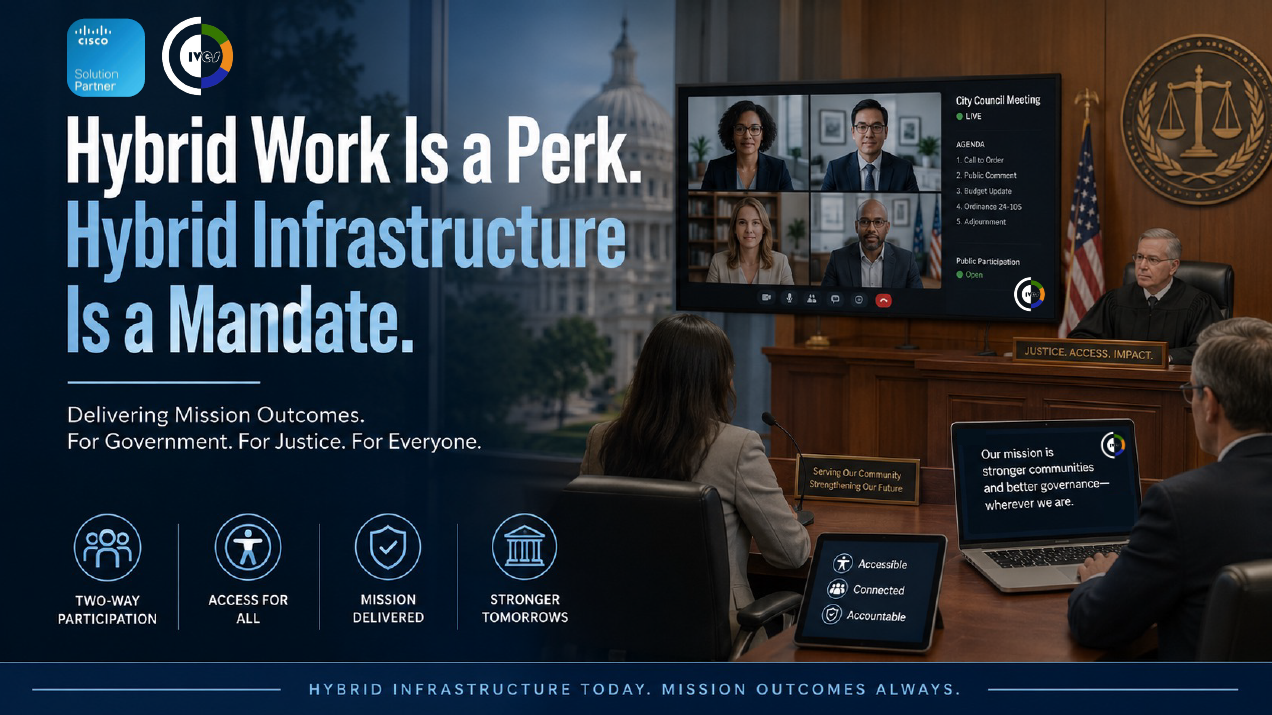
Strip away the workforce-productivity framing, and the real question is simple: is hybrid a perk your people get, or is it part of how your institution delivers on its mandate? For a company, the honest answer might be "a perk, mostly." For a government, a court, or a legislature, it has to be the second — because the mandate doesn't pause just because the room is half-empty.
That's the reframe worth taking away: stop measuring hybrid collaboration in government by whether the workforce likes it, and start measuring it by whether the mission gets delivered regardless of where the room is.
Questions Worth Asking Before You Build — or Buy
Turning that reframe into a procurement or design decision comes down to a short list of questions that a workforce-oriented hybrid tool usually can't answer well, but a mission-oriented one has to:
None of these are exotic requirements. They're the practical translation of "mission outcome" into the specifications an IT or procurement team can actually evaluate against.
Cives builds hybrid infrastructure designed around institutional mandates, not workforce policy. The platform already supports ADA and SB 707 compliance and answers every question in the checklist above by design — which is part of why it's trusted by more than 42 governments across four continents to measure success the way they should: by the outcome delivered, not the seat filled.
Introduction
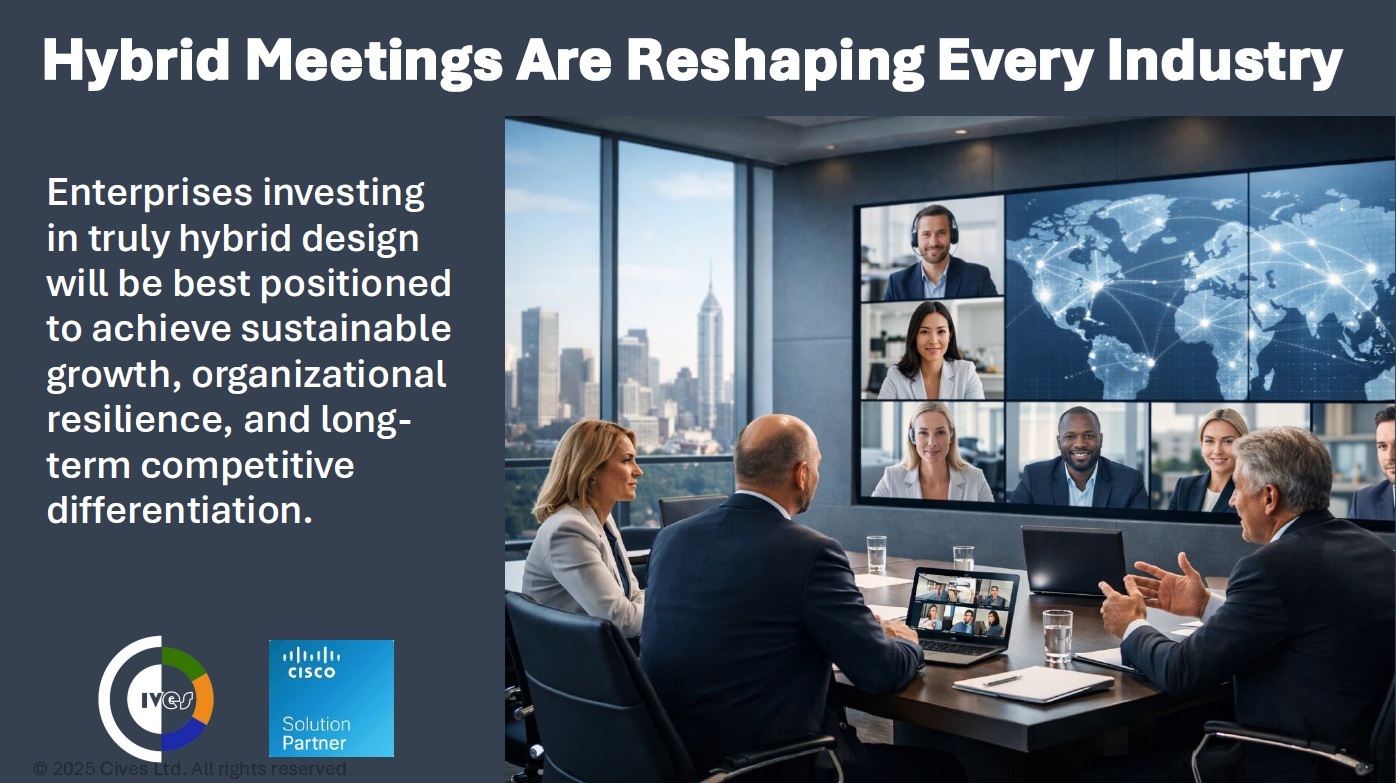
1. Introduction The global expansion of hybrid work arrangements has introduced a paradigm shift in how organizations coordinate activities, exchange...