Justice, Reimagined: Cives Heads to CTC 2025
Kansas City, MO — September 16–18, 2025 This September, the future of justice will meet its next bold chapter in Kansas City, and Cives is proud to...
2 min read
Brian McGlynn : Dec 17, 2025 10:57:36 AM
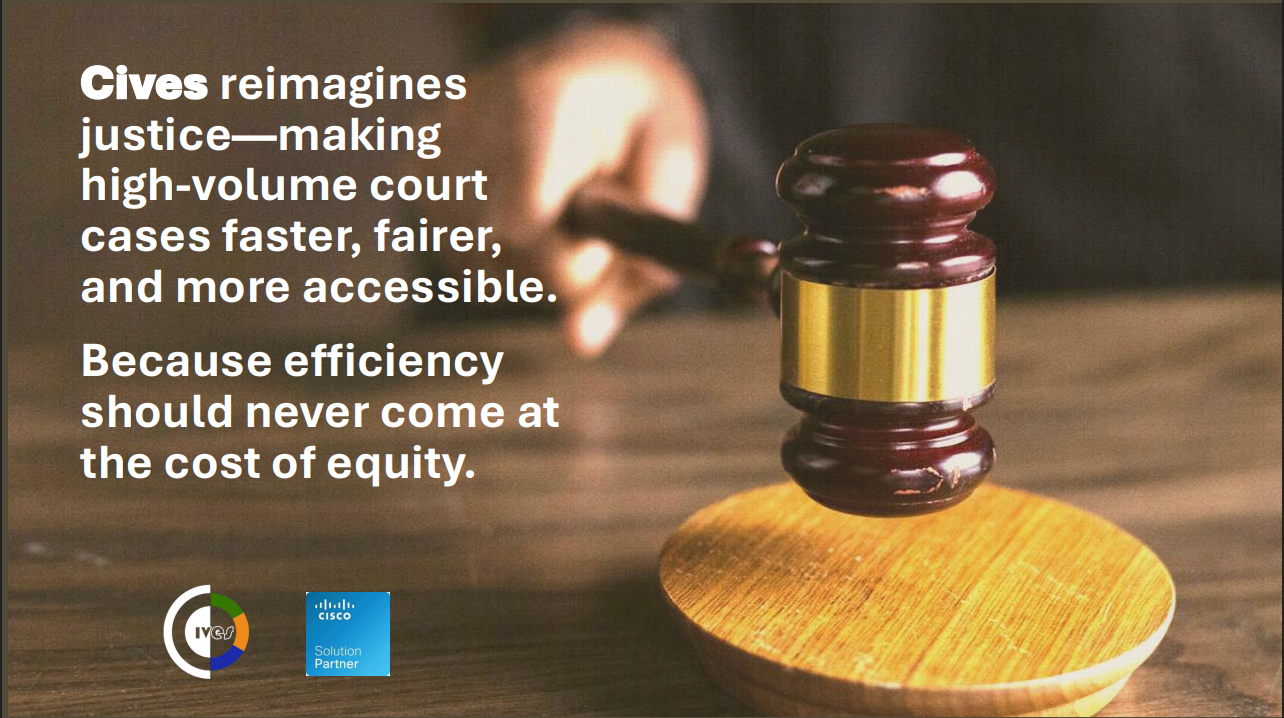
In an era where judicial efficiency is paramount, courts worldwide face mounting pressure to manage high-volume, low-complexity cases—from traffic violations to minor misdemeanors and administrative hearings. While individually brief, these cases can collectively strain judicial resources. Cives is designed to transform how fast-paced cases are managed, making the process more efficient and effective.
The Challenge: Managing Volume Without Sacrificing Justice
Traditional court systems often struggle with the sheer scale of rapid-fire legal matters. Clerks are overburdened, judges face docket overloads, and litigants—especially those who are self-represented—frequently encounter confusion and delay. While each case may last just a few minutes, their aggregate impact can lead to inefficiencies, backlogs, and even erosion of public trust.
Cives “Courts”: A Smarter Platform for Fast-Track Cases
Cives offers a powerful, purpose built hybrid and remote court system specifically tailored for high-throughput judicial environments. By combining video, audio, automation, intuitive interfaces, and intelligent workflow design, it enables courts to streamline case resolution while safeguarding fairness and transparency.
Key Benefits of Cives:
Real-Time Docket Management
By integrating seamlessly with the Court CMS, Cives acts as the real-time audio-visual and hearing execution layer, enabling dynamic collaboration that reflects the live progress of the court day. Judges and clerks can view the day’s upcoming docket, start, pause, skip, or conclude hearings, automatically initiate secure per-case recordings, and access case-level analytics. This reduces downtime and bottlenecks while ensuring docket information remains accurate, current, and auditable throughout the day.
Secure, Cloud-Based Infrastructure
Cives is built on secure, cloud-enabled architecture, enabling remote access, rapid deployment, and scalability—without extensive IT infrastructure investment.
Integrated Translation and Accessibility Features
Cives supports multilingual interfaces and accessibility tools such as screen readers and voice navigation, ensuring that individuals with limited English proficiency or disabilities can fully participate in court proceedings—vital in diverse jurisdictions.
Performance Analytics and Predictive Insights
The platform includes real-time analytics dashboards and historical reporting that help court administrators identify workflow inefficiencies, predict case surges, and optimize staffing—driving evidence-based decision-making.
Seamless Integration with Law Enforcement and Agencies
Cives can connect through APIs with police departments, probation offices, and regulatory bodies, enabling real-time updates on citations, warrants, and compliance. This API-driven interoperability helps reduce duplication, streamline workflows, and maintain accurate, up-to-date records across agencies.
Virtual Hearing Support and Hybrid Courtroom Capabilities
Cives provides courts with integrated audio-visual tools for select hearings, enabling video conferencing, screen sharing, document presentation, and real-time transcription—enhancing access and flexibility for remote and hybrid participants.
Transcription and Multilingual Support
Cives provides real-time transcription of hearings and proceedings, with support for multiple languages, enabling accurate records for all participants. This ensures accessibility for non-native speakers, facilitates review and compliance, and allows jurisdictions to efficiently track proceedings without relying solely on manual note-taking.
Public Engagement and Transparency Tools
Cives connects to existing public portals through its API, allowing litigants to check case status, deadlines, or fine balances, and enabling citizens to access anonymized court data or attend virtual public sessions. This approach strengthens civic trust by enhancing openness and transparency without duplicating existing systems.
Impact: Faster Justice, Lower Costs, Greater Confidence
Courts that have adopted Cives report measurable improvements in case resolution times, docket management, and overall user satisfaction. By minimizing administrative burdens and maximizing clarity, Cives ensures that even fast-moving cases are handled with efficiency, accuracy, and fairness.
And with its ability to scale, support virtual environments, and provide actionable intelligence, Cives empowers court systems to stay resilient in the face of rising case volumes and shifting public expectations
For governments and judicial systems aiming to modernize without compromising judicial integrity, Cives represents a compelling solution that aligns with the evolving demands of digital governance and public accountability.
Conclusion
The future of court management lies in intelligent, adaptive solutions that enhance both efficiency and fairness. Cives provides the real-time audio-visual and hearing execution layer that works on top of existing Court Management Systems, enabling seamless collaboration, automation, and accessibility. More than just a tool for case tracking, Cives is the platform that powers modern, flexible courtrooms—designed to meet the needs of 21st-century justice.
Kansas City, MO — September 16–18, 2025 This September, the future of justice will meet its next bold chapter in Kansas City, and Cives is proud to...

There are few better places to talk about the future than Lake Como. In just under three weeks, the Digital Innovation Forum will set up camp in one...
The phenomenon of Failure to Appear (FTA) in courts, where individuals miss their scheduled court hearings, is a complex issue with far-reaching...