
How Cives Is Redefining Government Collaboration on Cisco Webex
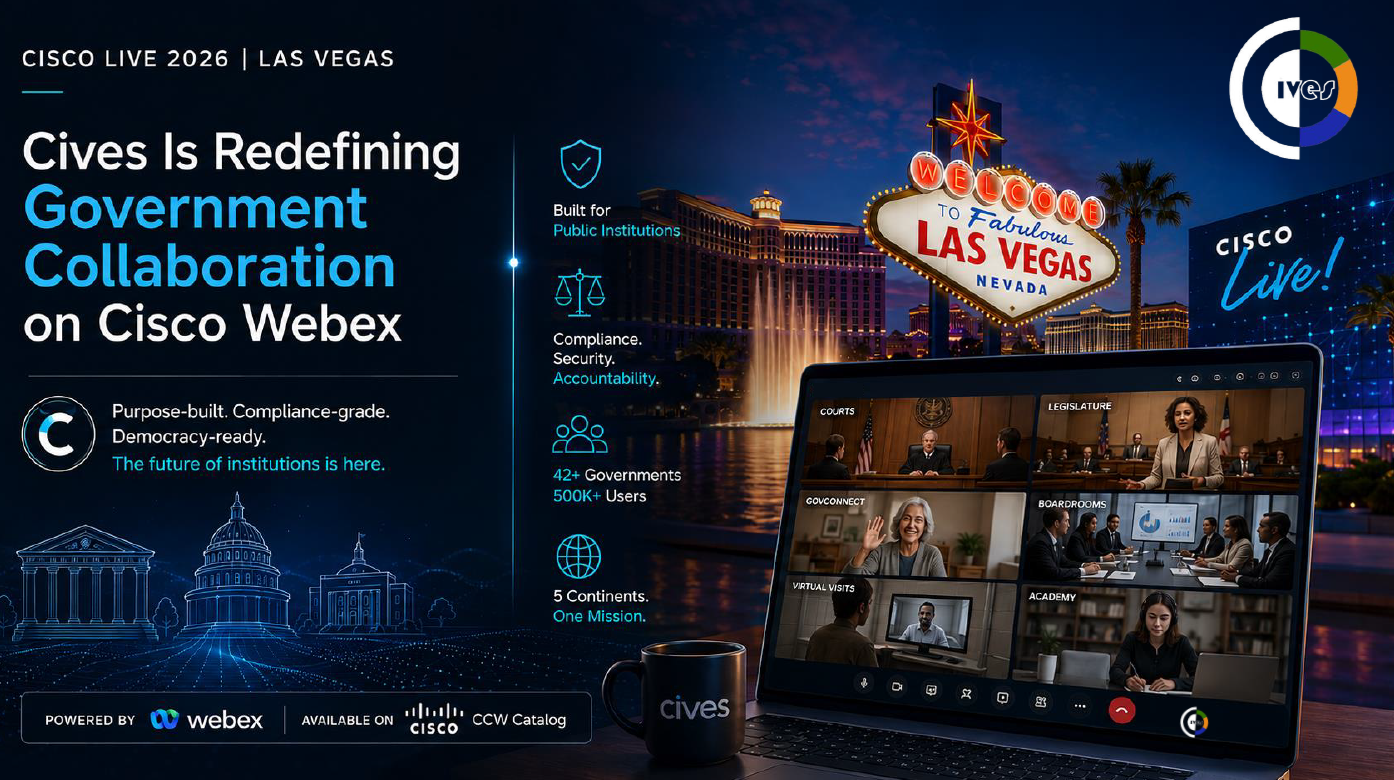
This week in Las Vegas, Cisco Live 2026 brings together thousands of technology leaders to debate the future of intelligent infrastructure,...
5 min read
Brian McGlynn : Jun 23, 2026 11:55:30 AM
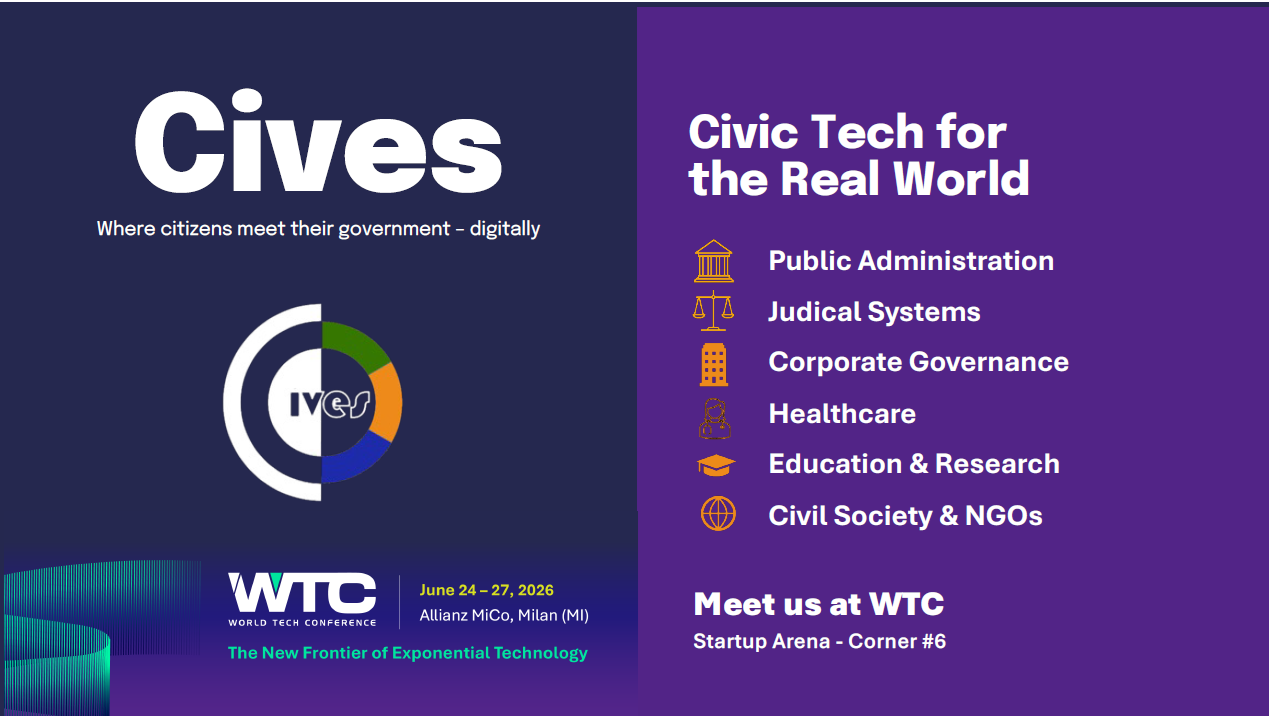
From June 24–27, Cives joins the startup showcase at Europe’s new forum for exponential technology, hosted at Allianz MiCo in Milan.
Starting Wednesday, Milan becomes the meeting point for some of the most ambitious technology conversations happening anywhere in the world. The World Tech Conference (WTC) 2026 brings AI researchers, quantum physicists, energy engineers, and policymakers under one roof at Allianz MiCo for four days, built around a single, sweeping premise: artificial intelligence, quantum computing, energy systems, blockchain, and the life sciences are no longer separate fields. They’re converging into the infrastructure that will define how the world is governed, powered, and organized for decades to come.
We’re proud to share that Cives has been selected to join the lineup of deep-tech startups featured at WTC 2026 — and we’re bringing a question that doesn’t usually share a stage with quantum processors: as institutions adopt all of this exponential technology, who makes sure it actually works for the citizens on the other end of it?
A forum built for convergence, not just computation
WTC isn’t shaped like a typical tech conference, and its backers reflect that. The event carries the title partnership of Q-Alliance, the collaboration between quantum computing leaders IonQ and D-Wave, alongside the patronage of Italy’s Ministry of Enterprises and Made in Italy, its Ministry of Foreign Affairs, and Regione Lombardia. Dozens of universities, research institutes, and industry associations round out its scientific and partner committees.
The programming is organized around six strategic pillars that stretch from pure physics to public policy: computation embedded directly into matter through quantum, photonic, and neuromorphic systems; the integration of AI, quantum, and high-performance computing into a single technical architecture; the energy and sustainability cost of running all of it; the security and governance challenges that come with deploying it at scale; the diplomacy required to coordinate it across borders; and a dedicated deep-tech ecosystem track for the startups translating these frontier ideas into working products. That last pillar — startups, testbeds, technology transfer — is where Cives fits in. We’re not building qubits or simulating new molecules. We’re building the layer where exponential technology actually meets the people it’s meant to serve.
Why a government collaboration platform belongs on this stage
Our name makes the point for us. Cives is Latin for “citizens.” When our hybrid meetings platform was built with Cisco Webex during the pandemic, the goal wasn’t simply to move a meeting room online — it was to make sure that as the world’s institutions went virtual almost overnight, no citizen lost their seat at the table. That mission hasn’t changed since; only its scale has.
That mission is, at its core, a question of inclusion. A courtroom that only the people who can physically travel to it can reach isn’t fully open in a digital age. A city council session that requires a car, a full day off work, or unencumbered mobility to attend isn’t fully public, regardless of what the law technically guarantees. The digital divide doesn’t only separate people by income or geography — it runs straight through institutions, in the gap between the governments that have modernized how citizens reach them and the many more that haven’t yet. Closing that gap is a democratic question as much as a technological one: every citizen excluded from a hearing, a vote, or a public service by distance, disability, or circumstance is, in a small but real way, excluded from their own governance.
It’s also, increasingly, the conversation governments themselves are having. As quantum computing and frontier AI move from research labs into national infrastructure, the institutions responsible for regulating, funding, and explaining that shift — courts, legislatures, regulators — are under more pressure than ever to stay accessible and legitimate in the eyes of the public. That’s not a side issue to the technology; it’s the precondition for any of it being adopted responsibly. WTC’s organizers seem to agree, which is part of why a forum about quantum annealing and small modular reactors makes room for a startup pitch arena and a deep-tech ecosystem track in the first place.
From a pandemic pivot to a global public-sector platform
Cives didn’t start as a conference-circuit company. The platform was built with Cisco Webex during the early days of the pandemic, when governments needed a way to keep courts, councils, financial institutions, and legislatures running with no notice and no playbook. What began as an emergency deployment has since become, in partnership with Cisco Webex, the platform of choice for hybrid government meetings: 42+ government customers, more than 500,000 users, and 450+ live sessions every single day, running on over 280 purpose-built application functions. Its customer base includes financial authorities, municipal and metropolitan councils, EU regulatory bodies, administrative judiciary authorities, tax and revenue agencies, civil and administrative courts, and prison and rehabilitation services.These are not pilot deployments. They are institutional dependencies.
Where government meets its citizens
Each of our products tackles a different point where government and citizen meet. Courts for Webex keeps legal proceedings accessible and secure, blending in-person and remote participation without compromising due process. Legislate for Webex lets lawmaking bodies stay in session and in quorum regardless of where individual members are sitting. GovConnect brings public services directly to citizens who can’t make it to a counter, turning a video call into a full administrative interaction. Boardrooms for Webex applies the same hybrid model to corporate and institutional governance, for organizations where physical presence and remote participation need to carry equal weight. Visitations for Webex connects incarcerated individuals with their families securely and with dignity, addressing one of the more overlooked corners of public-sector technology.
Taken together, it’s the less glamorous, more essential side of exponential technology: not just what’s computationally possible, but what’s actually deployable in a courtroom, a city council chamber, or a parliamentary office tomorrow morning — and what 42+ governments around the world already selected.
Digital transformation is more than technology
It’s tempting, especially at a conference built around quantum processors and photonic chips, to treat digital transformation as a problem technology alone can solve: deploy the right platform, and the rest follows. Years of working inside courts, legislatures, and public agencies have taught us otherwise. The platform is only ever one piece of a much larger system. Real transformation depends just as much on the infrastructure that carries it, the skills of the people who operate it day to day, the research that keeps improving it, the businesses that build and maintain it, the public administrations that adopt and govern it, and — underneath all of it — the strategic vision and public policy that decide whether any of this gets funded, mandated, and scaled, or quietly left to wither as a pilot program nobody finishes.
WTC’s own guest list makes the same point, even if it isn’t stated outright. A conference that seats quantum computing companies next to government ministries, universities, and a dedicated startup ecosystem track isn’t really arguing that technology wins on its own — it’s modeling the fact that transformation only happens when research, industry, public administration, and policy move together. That’s the system Cives has always built inside. We don’t see ourselves as a technology vendor selling a product to government; we see ourselves as one piece of the infrastructure a society needs to keep its institutions open, accessible, and trusted as everything around them changes. Milan, for four days, is that system in miniature — and citizens are the reason it’s worth building at all.
The conversation we’re bringing to Milan
Quantum computing and frontier AI will eventually touch every public institution on earth. Someone has to build the bridge between that frontier and the everyday business of governing — the part that doesn’t make it into a keynote about photonic computing, but that determines whether any of this technology earns public trust. That’s been our work for years, and WTC 2026, with its own pillar dedicated to human-technology governance, is the right room to have that conversation alongside the people building the rest of that future.
Meet us in Milan
You’ll find Cives among the startups featured at WTC 2026, June 24–27 at Allianz MiCo. Startup Arena, Corner #6 is where to find our team — stop by for a live walkthrough of the platform, or to talk through what hybrid deployment could look like for your own institution. If you’d rather lock in time before the schedule fills up, reach out ahead of the show.
Can’t make it to Milan? You can see Cives in action anytime by requesting a demo at cives.ai, or follow along for updates from the show on our social channels.
We started by asking how to keep citizens connected to their governments when the world went remote. At WTC 2026, we’re asking the next question: as governments adopt the next wave of exponential technology, how do we make sure citizens — cives — stay at the center of it?
This week in Las Vegas, Cisco Live 2026 brings together thousands of technology leaders to debate the future of intelligent infrastructure,...

InfoComm 2026 opens this week at the Las Vegas Convention Center, gathering the global Pro AV and collaboration industry to debate the future of...
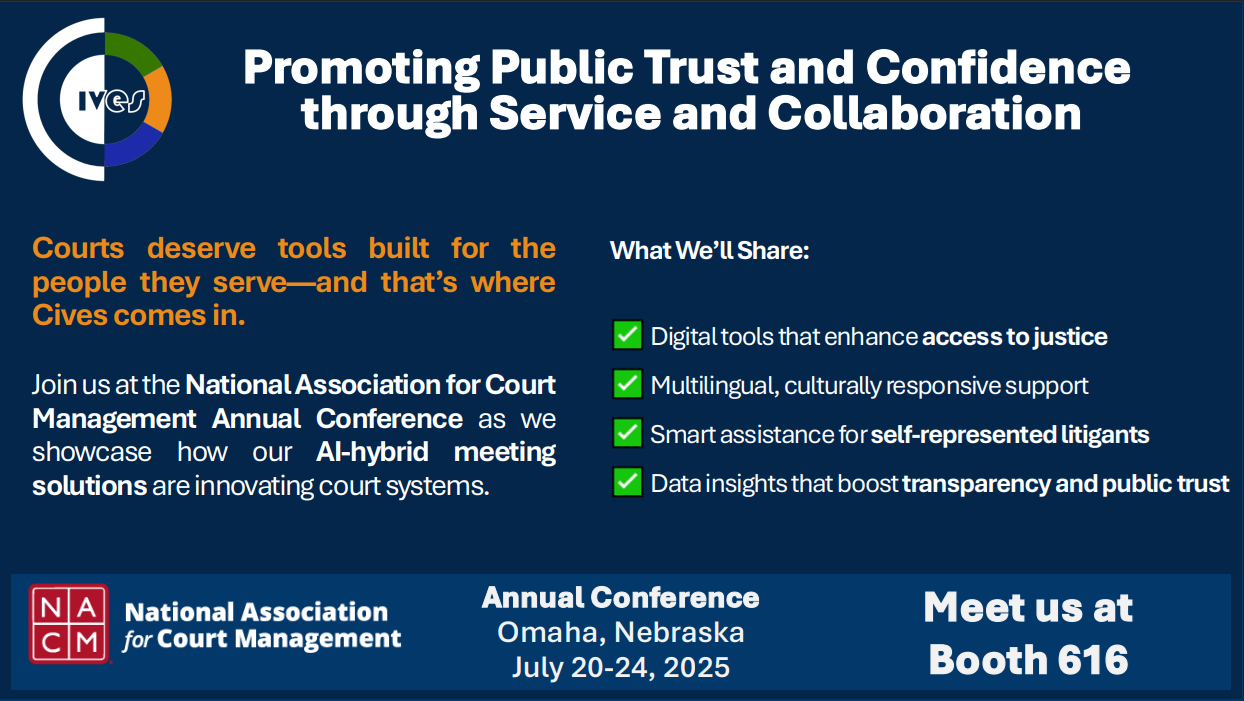
Omaha, NE — July 20–24, 2025